Express Entry Draw Opened on 5th March 2026
 Apply Australia Immigration Check your eligibility right way!



 Callback Request
 6 November, 2025
The Canadian federal government has released its much-anticipated 2026-2028 Immigration Levels Plan, setting the course for the nation's immigration strategy over the next three years. This year’s plan signals a pivotal and highly strategic shift, moving decisively to solidify the Temporary-to-Permanent Residency pathway and stabilize admission targets.
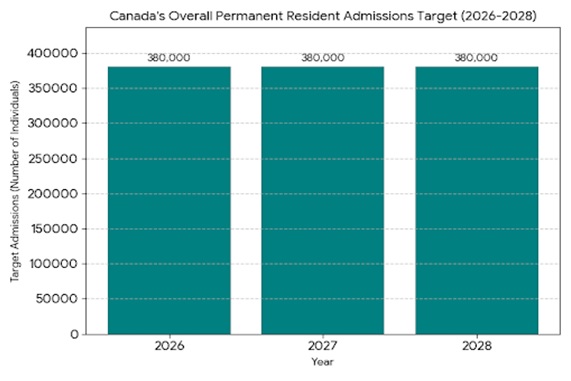
The plan affirms Canada’s ambitious, yet measured, approach to growth, maintaining a stable overall annual permanent resident target of 380,000 for 2026, 2027, and 2028. This consistency aims to provide much-needed predictability for immigrants, employers, and provinces alike. However, the stability in the overall number belies significant, transformative changes within the categories—changes that underscore a commitment to prioritizing skilled workers already contributing to the Canadian economy.
The core message to those seeking a Canada PR Visa is clear: the focus is shifting from simply welcoming temporary residents to strategically converting proven, in-demand talent into permanent nation-builders. This article breaks down the three most critical updates affecting permanent residency and work permits.
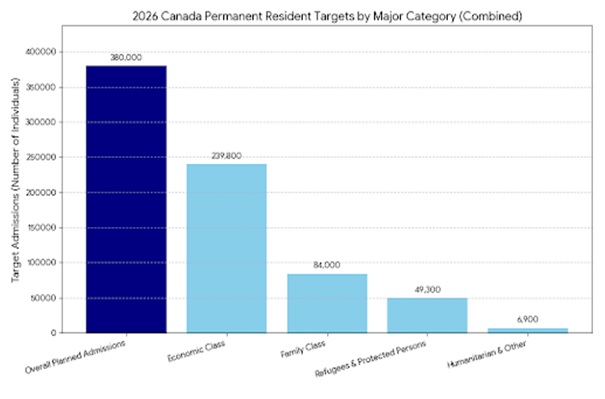
| 2026 | 2027 | 2028 | |
| Economic | 239,800 | 244,700 | 244,700 |
| Family reunification | 84,000 | 81,000 | 81,000 |
| Refugee and humanitarian | 56,200 | 54,300 | 54,300 |
| Total | 380,000 | 380,000 | 380,000 |
The cornerstone of the 2026-2028 plan is the continued and heightened focus on economic growth through immigration. The target for the Economic Immigration Class—the category encompassing Express Entry, Provincial Nominee Programs (PNP), and Federal Economic Pilots—has received a modest yet significant boost, reaffirming the government's priority on skilled labour.
For 2026, the target for this crucial category jumps to 239,800, marking an increase of 10,050 spots from the previous plan’s 2026 target of 229,750. This means that approximately 63.1% of all 2026 permanent resident admissions will be allocated to the Economic Class, up from the previous plan's percentage allocation.
2026 Economic Class Target Comparison
| Category | 2026 Target (Current Plan) | Previous Plan Target (2026) | Numerical Increase |
| Economic Class Admissions | 239,800 | 229,750 | +10,050 |
This increase signals a positive outlook for applicants in high-demand fields such as STEM, healthcare, and skilled trades. Candidates in the Express Entry pool, particularly those eligible for category-based selection draws, are likely to benefit from this expansion, as the federal government looks to quickly fill persistent labour shortages across the country.
Perhaps the most dramatic change in the new plan is the massive realignment between provincial immigration streams and federal temporary worker programs. The government has clearly signalled its intent to empower provinces to secure their desired permanent residents while tightening controls on the temporary workforce.
A 66% Boost for the Provincial Nominee Program (PNP)
The Canadian federal government has provided an enormous boost to the Provincial Nominee Program (PNP), recognizing the crucial role provinces and territories play in addressing specific regional labour needs.
In 2026, Canada plans to admit a total of 91,500 permanent residents through the PNP. This represents an increase of 66% from the previous plan's 2026 target of 55,000.
This significant expansion of PNP allocations is excellent news for:
A Scale Back on the Temporary Foreign Worker Program (TFWP)
In a balancing act to manage the overall temporary resident population and enhance the path to permanency, the government has simultaneously scaled back the Temporary Foreign Worker Program (TFWP).
The 2026 admissions target for workers under the TFWP has been set at 60,000, which is a 26.8?crease from the previous plan's target of 82,000. This adjustment aligns with the government’s stated goal of creating a more sustainable and intentional temporary resident system, ensuring that temporary workers are filling genuine, strategic labour gaps while promoting pathways for those with the greatest potential for long-term integration.
Key Target Comparison: PNP vs. TFWP
| Program | 2026 Target (Current Plan) | Previous Plan Target | Change |
| PNP (Permanent Residency) | 91,500 | 55,000 | +66% |
| TFWP (Temporary Worker) | 60,000 | 82,000 | -26.8% |
A landmark policy in this new plan, explicitly detailed in Budget 2025, addresses the growing demand for a clearer pathway for foreign nationals already in Canada.
Canada will launch a new, dedicated program to transition up to 33,000 work permit holders to permanent residence over 2026 and 2027. This initiative is a crucial step in fulfilling the promise of a more focused Temporary-to-Permanent strategy.
This targeted program is expected to benefit a large pool of current temporary residents, including:
This measure solidifies the value of Canadian work experience and provides a fast-track option for individuals who have already proven their ability to contribute socially and economically.
| 2026 (current plan) | 2025 | 2026 (previous plan) | |
| Workers | 230,000 | 367,750 | 210,700 |
| Students | 155,000 | 305,900 | 305,900 |
| Total | 385,000 | 673,650 | 516,600 |
The Broader Immigration Landscape: Reduced Temporary Targets
While the permanent resident targets remain stable, the new plan introduces substantial cuts to temporary resident admissions targets, reinforcing the government's aim to control the overall non-permanent resident population.
The overall target for Temporary Resident Admissions for 2026 is reduced to 385,000, a significant decrease from the 2025 target of 673,650. This cut is largely driven by a near 50% reduction in the international student admissions target, which is set at 155,000 for 2026 (down from 305,900 in the previous plan). The TFWP reduction further contributes to this strategic scale-back.
| Category | 2026 (Current Plan) | 2025 Target (Previous Plan) | Change |
| Total Temporary Residents | 385,000 | 673,650 | -43% |
| International Students | 155,000 | 305,900 | -49.3% |
| TFWP Workers | 60,000 | 82,000 | -26.8% |
This rebalancing act highlights the government’s commitment to ensuring that immigration levels are sustainable and aligned with Canada’s capacity for settlement, particularly concerning housing and public services.
Navigating the New Plan: What Immigrants Should Do Now
The 2026-2028 Immigration Levels Plan presents a landscape of both stability and specific, high-opportunity pathways.
This plan is a strategic mandate for quality over quantity, offering a more direct and reliable route for those ready to make Canada their permanent home.
Also read-
IRCC invites 6,000 French Speakers in one of the biggest Express Entry Draws of the Year
Canada Invites 1,000 CEC Candidates in Latest Express Entry Draw held on 28th October
IRCC Issues 302 Invitations in Second PNP Draw of October
Canada Targets Healthcare Professionals in Latest Express Entry Draw- Invites 2,500 Candidates
To know more and apply for immigration to Canada in 2026, you may get in touch with our Trusted Canada Migration expert at Toll-Free No. 78-18-000-777 or you can drop us an e-mail at info@visasavenue.com.
6 March, 2026
5 March, 2026
4 March, 2026
3 March, 2026
21 February, 2026
20 February, 2026
20 February, 2026
19 February, 2026
18 February, 2026
17 February, 2026
9 February, 2026
7 February, 2026
6 February, 2026
5 February, 2026
22 January, 2026
22 January, 2026
21 January, 2026
13 January, 2026
8 January, 2026
6 January, 2026






 Quick Inquiry
 Rajneesh Kumar